Veterans Day & Remembrance Day 2026: LGBTQ Veterans, PTSD, Ketamine and MDMA Therapy
Every November 11, Canada and the United States recognize the contributions and sacrifices of military veterans. In the United States, Veterans Day honours those who served in the armed forces, while Canada’s Remembrance Day commemorates military service and sacrifice.
For many veterans, the challenges of military service continue long after they return to civilian life. Post-traumatic stress disorder (PTSD), depression, chronic pain, and substance use disorders can affect veterans for years.
For LGBTQ veterans, these challenges may intersect with historical discrimination, identity concealment, social isolation, and difficulties accessing inclusive mental health care.
Meanwhile, emerging research into ketamine and MDMA-assisted therapy is generating new conversations about the future of PTSD treatment.
This November 11, Pride Pulse recognizes LGBTQ veterans and explores the potential of these therapies, their availability in Canada and the United States, and the importance of accessible, inclusive harm reduction and mental health support.
PTSD and Mental Health Among Military Veterans
Military service can expose individuals to combat, injury, sexual violence, and other traumatic experiences. Although most veterans do not develop PTSD, those who do may experience intrusive memories, nightmares, hypervigilance, emotional numbness, and difficulties with everyday life.
Some veterans also experience depression, chronic pain, and problematic substance use.
According to the US Department of Veterans Affairs’ National Center for PTSD, established treatments include cognitive processing therapy, prolonged exposure therapy, eye movement desensitization and reprocessing (EMDR), and certain medications.
However, not every veteran responds adequately to existing treatments. Researchers are therefore investigating additional options, including ketamine and MDMA-assisted psychotherapy.
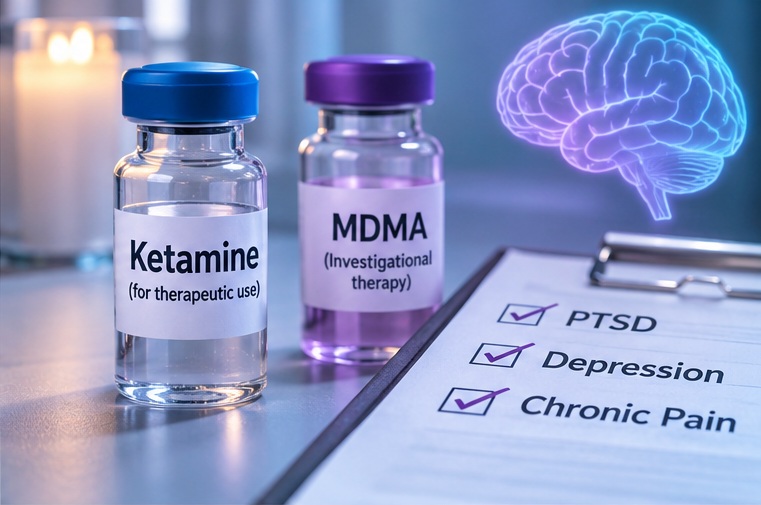
MDMA-Assisted Therapy: A Promising New Direction for PTSD Research
MDMA, commonly associated with recreational ecstasy, has attracted significant scientific attention for its potential role in treating PTSD.
Researchers have investigated whether MDMA, when administered in carefully controlled clinical settings alongside structured psychotherapy, can help patients process traumatic memories.
MDMA can temporarily alter emotional responses, potentially reducing fear and increasing feelings of trust and openness. These effects may make it easier for some individuals to engage with difficult experiences during psychotherapy.
Landmark MDMA Clinical Trials
One of the most influential research programs was developed by the Multidisciplinary Association for Psychedelic Studies (MAPS), with later development through Lykos Therapeutics.
A landmark 2021 Phase 3 clinical trial published in Nature Medicine reported that approximately 67% of participants receiving MDMA-assisted therapy no longer met diagnostic criteria for PTSD at the primary endpoint, compared with approximately 32% receiving therapy with placebo.
A subsequent 2023 Phase 3 trial published in Nature Medicine also reported significant improvements in PTSD symptoms.
These findings helped establish MDMA-assisted therapy as a serious subject of psychiatric research.
However, questions remain about study blinding, expectancy effects, long-term safety, and the contribution of psychotherapy. In August 2024, the US Food and Drug Administration declined to approve the proposed MDMA-assisted PTSD treatment and requested additional research.
MDMA-assisted therapy remains investigational in the United States and Canada. Researchers hope that MDMA-assisted therapy may help some patients engage more effectively with trauma-focused psychotherapy.
Ketamine Therapy for Veterans: What Does the Research Show?
Ketamine is another medication attracting attention in psychiatric research.
Originally developed as an anaesthetic, ketamine has demonstrated rapid antidepressant effects in some clinical settings. Researchers are also investigating its potential for PTSD, particularly among individuals who have not responded adequately to conventional treatment.
A 2021 randomized clinical trial published in the American Journal of Psychiatry investigated repeated intravenous ketamine infusions for chronic PTSD.
Researchers found greater reductions in PTSD symptom severity among participants receiving ketamine than among those receiving midazolam, an active comparator.
Although promising, the study was relatively small. Questions remain about the durability of symptom improvement, the effects of repeated administration, and which patients are most likely to benefit.
Ketamine is not approved specifically as a PTSD treatment in either Canada or the United States.
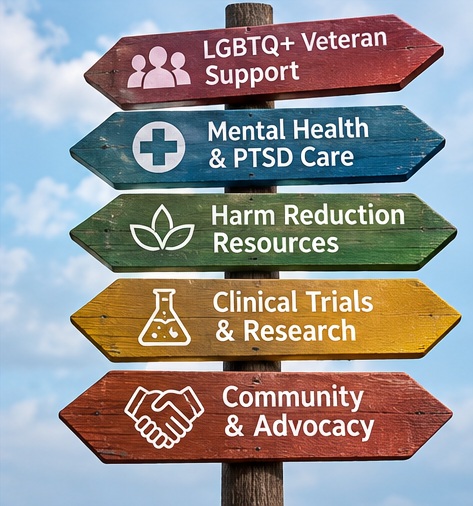
Ketamine and MDMA Therapy Access in Canada
Canadian veterans interested in emerging mental health treatments face an important distinction between medically prescribed ketamine, ketamine-assisted psychotherapy, and investigational MDMA therapy.
Veterans Affairs Canada Funds Certain Ketamine Treatments
According to Veterans Affairs Canada’s April 27, 2026 policy briefing on Emerging Mental Health Treatments for Veterans, Veterans Affairs Canada reimburses ketamine as a pharmacological treatment for treatment-resistant depression and chronic pain.
Depending on the clinical indication and eligibility requirements, covered formulations may include intravenous infusions, oral ketamine, esketamine nasal spray, and compounded topical preparations. However, Veterans Affairs Canada distinguishes these medical treatments from psychedelic-assisted psychotherapy, which is not currently reimbursed.
Canadian Clinical Trial Investigates Ketamine for Veterans With PTSD and Chronic Pain
Research is continuing in Canada. Health Canada’s Canadian Clinical Trial Search Portal lists a study investigating ketamine-assisted psychotherapy for veterans and civilians experiencing both chronic pain and PTSD. The study, titled Ketamine Assisted Psychotherapy to Improve Quality of Life in Veterans and Civilians With Comorbid Chronic Pain and Posttraumatic Stress Disorder, examines ketamine infusions combined with mindfulness-based psychotherapy.
The trial compares this approach with psychotherapy alone, exploring whether combining treatments may improve quality of life and reduce symptoms. The clinical trial record identifies the study as recruiting as of its September 2026 update. Readers can also review its ClinicalTrials.gov registration, NCT07009158 for eligibility, research locations, and updated recruitment information.
Is MDMA Therapy Available in Canada?
MDMA-assisted psychotherapy is not a routinely approved PTSD treatment in Canada. However, Health Canada’s Special Access Program for psychedelic-assisted psychotherapy provides a potential pathway for authorized healthcare practitioners to request access to otherwise unauthorized medications in exceptional circumstances.
MDMA and Ketamine Therapy Access in the United States
May 2026: VA Announces MDMA Clinical Trial Involving 80 Veterans
On May 26, 2026, the US Department of Veterans Affairs announced a new clinical trial investigating MDMA-assisted therapy for PTSD and alcohol use disorder. The study is designed to enroll approximately 80 veterans.
Researchers will compare outcomes among participants receiving MDMA-assisted psychotherapy and those receiving the same psychotherapy with an active placebo. The trial represents an important development because it investigates MDMA-assisted therapy specifically within a veteran population experiencing serious mental health challenges.
July 2026: VA and HHS Expand Cooperation on Psychedelic Research
On July 13, 2026, the US Department of Veterans Affairs and Department of Health and Human Services announced a memorandum of understanding to improve cooperation on psychedelic clinical trials. The agreement includes efforts to increase clinical trial participation, provide training for healthcare professionals, and improve coordination around research and regulatory evaluation.
These developments suggest growing federal interest in investigating psychedelic treatments for veterans. However, clinical research and government support for research do not establish that a treatment is safe, effective, or approved for routine clinical use.
Xanax, Anxiety, and PTSD Among Veterans
Some veterans experiencing PTSD, anxiety, or sleep disturbances may encounter prescription benzodiazepines such as Xanax (alprazolam). Xanax can provide short-term relief for certain anxiety symptoms, but it is not recommended as a treatment for PTSD itself. The US Department of Veterans Affairs advises against benzodiazepines for PTSD because of limited evidence of benefit and risks including dependence, withdrawal, and cognitive impairment.
From a harm reduction perspective, combining Xanax with alcohol, opioids, or other sedatives can be particularly dangerous, increasing the risk of respiratory depression and overdose. For veterans managing trauma-related symptoms, access to appropriate medical guidance and evidence-based mental health care remains essential.
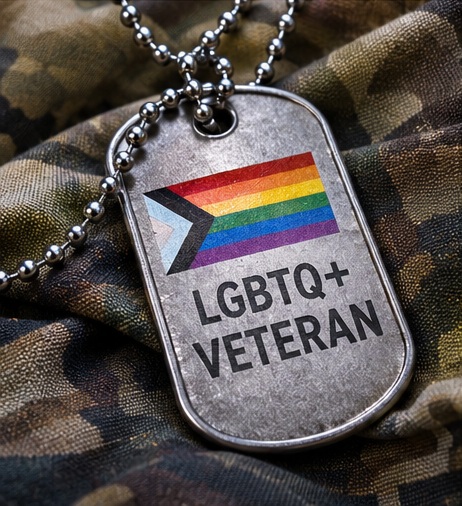
LGBTQ Veterans: Service, Discrimination, and Resilience
LGBTQ people have served in the Canadian and American armed forces for generations, including during periods when openly identifying as LGBTQ could threaten their military careers.
In the United States, the military’s former Don’t Ask, Don’t Tell policy prevented openly lesbian, gay, and bisexual personnel from serving until its repeal took effect in 2011.
In Canada, LGBTQ military personnel and federal employees experienced systematic discrimination under policies commonly associated with the LGBT Purge. From the 1950s through the early 1990s, LGBTQ personnel were subjected to surveillance, interrogations, dismissals, and other discriminatory treatment.
For some LGBTQ veterans, these experiences have contributed to lasting mistrust of military and government institutions. Recognizing this history is essential to understanding why culturally competent, affirming mental health services matter.
Pride Pulse: LGBTQ Harm Reduction and Veteran Mental Health
Veterans Day and Remembrance Day are opportunities to recognize military service, sacrifice, and the responsibility society holds toward those who have served. For LGBTQ veterans, remembrance also means acknowledging individuals who served despite discrimination and those whose contributions were historically overlooked.
At Pride Pulse, we believe LGBTQ communities deserve access to accurate information, nonjudgmental education, and respectful conversations about substance use and mental health. This includes LGBTQ veterans whose experiences may involve military trauma, discrimination, substance use, or difficulties finding supportive healthcare environments.
Our harm reduction perspective emphasizes informed decision-making and awareness of substance-related risks. For LGBTQ veterans, harm reduction can involve confidential conversations about alcohol and drug use, overdose prevention, avoiding dangerous substance combinations, and seeking trauma-informed treatment.
Emerging research involving ketamine and MDMA offers important opportunities for scientific investigation, but these substances should not be presented as substitutes for established PTSD treatments. Veterans experiencing PTSD, depression, substance-related challenges, or other mental health concerns can access professional support through established veteran services.
This November 11, Pride Pulse honours LGBTQ veterans in Canada and the United States and supports a future in which every veteran can seek care with dignity, respect, and without stigma.
This article is intended for educational and harm reduction purposes. It does not provide medical advice or recommend the use of unregulated substances to treat PTSD or other mental health conditions.